

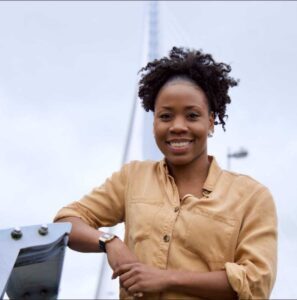
Home violence, in particular spouse violence, is a vital infection at the islands. Within the Ecu Netherlands, population from the Caribbean portions of the dominion also are all in favour of those crimes extra incessantly than alternative minority teams. Criminologist and researcher Kristen Martina (33) has studied how gender and emotion law play games a job on this factor. She explains why the ‘correctional tap’ is much less blameless than population infrequently suppose.
Kristen Martina grew up in Buena Vista, considered one of Curaçao’s poorer neighborhoods the place crime has risen over time. She questioned why some population make a choice a unique trail than others, even if they’re from the similar section. This query led her to review criminology. Then incomes two grasp’s levels, she labored as a researcher at diverse institutes. Lately, she’s an marketing consultant for the probation provider, that specialize in home violence and kid abuse throughout the Caribbean public. She may be knowledgeable by way of revel in, having survived spouse stalking, a method of home violence.

Picture from Kristen Martina’s non-public archive
Gender Roles
“I discovered a lot,” she starts. “First, gender plays a big role in partner violence, mainly because of the authority and aggression associated with ‘machismo.’ By gender roles, I mean the expectations about how men and women should behave – for example, that men should be tough and women should be sweet. Simply put, these different expectations and power imbalances lead to conflict, which in turn leads to violence.”
Emotion Law
Martina additionally found out the significance of emotion law: the power to acknowledge, perceive, specific, and regulate your feelings in a wholesome manner. This ability begins with the way you’re raised. “In Curaçao, physical discipline is still part of parenting in some families,” Martina says. She discovered that bodily self-discipline is a method of adverse self-discipline that will increase the danger of dangerous emotional responses then in era. “This makes you more likely to become aggressive and use violence during a conflict. It’s not a direct, one-to-one consequence, but it does increase the risk,” she explains.
Martina noticed this problem with dealing with feelings within the population she interviewed for her analysis. “Often, both men and women said that communication was very important in relationships, but they felt there wasn’t enough deeper conversation about feelings and truly vulnerable topics. The people I spoke with wanted this, but they felt they lacked the necessary skills.”
The apply of bodily self-discipline being a part of a kid’s upbringing additionally applies to Bonaire, Sint Eustatius, and Saba (the BES islands). A up to date learn about by way of Leiden College, the College of Curaçao, and UNICEF Netherlands discovered that hitting kids is a culturally approved a part of self-discipline. In line with the learn about, many surveyed citizens of the BES islands mentioned that parenting is incessantly strict, with kids given tiny room to precise their reviews. “It’s not common for parents to listen to their children’s feelings or include them in decisions,” the researchers famous.
Double Usual
A remarkable discovering in Martina’s analysis used to be that even supposing population at all times considered violence negatively and supported parenting with out bodily self-discipline, some nonetheless felt bodily self-discipline used to be spot on below sure cases. “The distinction these people made was based on the level of violence and the child’s behavior,” she explains. “They considered mild forms of physical discipline, like a ‘correctional tap,’ as harmless, but saw more severe forms as abusive.”
Martina believes it’s impressive to outline the time period ‘correctional tap.’ “It’s a broad term, but it can be defined as a mild form of physical punishment, such as a light tap on the hand or butt, meant to correct or discipline a child. The idea is that the child will learn which behavior is acceptable through this tap. However, in the Netherlands, a ‘correctional tap’ has been illegal since 2007 and is considered child abuse.”
“Power and personal honor are important factors in physical discipline,” Martina says. “Violence can be seen as a way to demand respect and reinforce a certain hierarchy.” This additionally applies to how population mother or father. “Some parents think it’s okay to hit their child because ‘I have a reason, you must listen to your parents.’”
In the event you be informed in youth that violence is handiest alright to form any person concentrate or call for appreciate, you’re much more likely to significance that very same reasoning as an grownup. This double usual round violence makes it parched to understand what’s and isn’t applicable. “This needs to be clearer,” Martina says. “Even the ‘correctional tap,’ no matter how mild, can be harmful.” She warns that ordinary bodily self-discipline too can manage to worry, low self-confidence and conceit, behavioral problems, mental issues, and aggression, which is able to endmost into maturity.
Context of Poverty
Martina desires to worry that the ‘correctional tap’ and home violence aren’t present in all Caribbean families. Then again, there are systemic societal elements that form it extra ordinary, equivalent to poverty, unemployment, housing issues, and inequality. “In Curaçao, thirty percent of the population lives below the poverty line. These circumstances create stress, which makes it harder to handle conflicts. You could say that financial stress and poverty increase the risk of domestic violence,” Martina explains.
Within the Caribbean Netherlands, about one-third of the folk additionally lives beneath the poverty order. Researchers, together with the ones from Leiden College, agree that it is a breeding garden for home violence. This implies that lowering poverty can have the sure aspect impact of lowering home violence within the Caribbean public.
Suggestions
The UNICEF learn about recommends the usage of the power of near folk ties and robust public spirit at the islands to struggle violence. “We need to look at how family members can be supported to use non-violent forms of communication, both between partners and between parents and their children,” the learn about advises. “Non-violent upbringing and family communication should become the norm, in line with international agreements.”
As well as, the researchers counsel making an investment in training about kids’s rights, ladies’s rights, gender equality, and social justice. They counsel making backup products and services extra out there, being attentive to confidentiality and perpetuity, either one of that are below force in mini communities with top migration.
Gender- and Tradition-Delicate Method
In order with this recommendation, Martina advocates for a gender-sensitive means: what are we educating boys and what are we educating women? She additionally argues for a culture-sensitive means that makes use of the sure facets of the tradition to aid remedy the infection. “Politeness, respect for parents and elders, and the ‘we-culture’ are examples of positive aspects of Caribbean upbringing that can be used to reduce violence.”
Martina additionally emphasizes the significance of studying sure verbal exchange and supplementary parenting abilities. “The more positively parents discipline their children – for example, by clearly explaining boundaries and rules and giving compliments as reinforcement – the less aggression children will learn and show later in life.” When requested what a mother or father can do rather of the usage of a ‘correctional tap,’ Martina says the Caribbean public would take pleasure in extra training and sensible steering.
Collaboration
“Providing education and guidance is a challenge on the islands, which have limited resources. It doesn’t compare to all the money the Netherlands has for research, education, and campaigns.” Subsequently, Martina stresses the desire for extra structural collaboration between the Ecu Netherlands and the islands, together with addressing the systemic elements connected to home violence. Then again, Martina sees too that just right steps are being taken. “For example, there are shelters for victims that are very good at dealing with the small scale of the islands, and cooperation among organizations is also improving,” she says. “The islands are very creative. So, certainly there is hope.”
For more info about home violence on Bonaire, click on here.
