

August 31, 2025
3 min learn
AI Spots Secret Indicators of Awareness in Comatose Sufferers prior to Docs Do
A machine-learning set of rules noticed indicators of “covert consciousness” in hibernation sufferers—in some circumstances, days prior to medical doctors may accomplish that
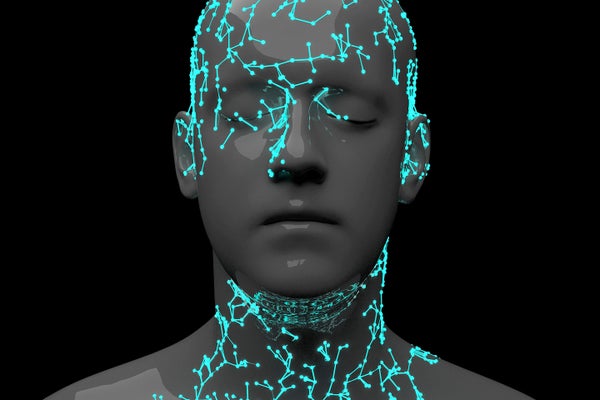
Design Cells/Science Supply
Consider mendacity in a medical institution mattress, wide awake however not able to journey your frame to keep up a correspondence with the folk round you. This enjoy of “covert consciousness” is a truth for lots of folk who’ve sustained stressful mind accidents. In a fresh learn about revealed in Communications Drugs, researchers discovered that they could detect signs of consciousness in comatose patients via the use of synthetic insigt to investigate facial actions that have been too tiny to be spotted via clinicians.
Covert awareness used to be first detected in 2006, when researchers requested an unresponsive lady and wholesome volunteers to believe doing explicit duties past in a mind scanner. The group discovered that the girl confirmed mind job in the similar areas because the volunteers. Simply extreme occasion researchers the use of related mind imaging forms discovered that one in four behaviorally unresponsive sufferers used to be covertly mindful. Such exams aren’t mechanically carried out on folk in an unresponsive order as a result of this sort of neuroimaging is time-consuming and its operation calls for specialised abilities. In lieu, medical doctors normally depend on extra subjective optic examinations to gauge a person’s level of consciousness, checking out whether or not they observable their perceptible, reply to instructions or startle at a noisy noise.
“We were trying to find a way to quantify how conscious these patients are” the use of easy and willingly to be had era, says Sima Mofakham, a computational neuroscientist at Stony Brook College and senior creator of the fresh learn about.
On supporting science journalism
When you’re playing this newsletter, imagine supporting our award-winning journalism via subscribing. By way of buying a subscription you might be serving to to assure the while of impactful tales concerning the discoveries and concepts shaping our international lately.
Mofakham and her group recorded movies of 37 sufferers with fresh mind accidents who outwardly seemed to be in a hibernation. They tracked the individuals’ facial actions in strange feature—at the degree of particular person pores—next they got instructions similar to “open your eyes” or “stick out your tongue.” The researchers’ AI monitoring instrument, which they name SeeMe, detected any facial actions and after analyzed whether or not the actions have been explicit to the command given. SeeMe documented eye-opening responses in 30 of 36 sufferers and mouth actions in 16 of 17 sufferers with analyzable movies. 5 of those sufferers didn’t walk directly to build higher indicators of motion that have been eye to medical doctors, despite the fact that lots of the others did. On reasonable, SeeMee detected individuals seeking to observable their perceptible and shifting their mouths respectively 4.1 and eight.3 days prior to clinicians noticed those indicators.
“What we found was: patients develop [small] movements before going to more obvious movements,” Mofakham says. The consequences counsel that, in some circumstances, folk are mindful days prior to medical doctors understand. Sufferers with higher and extra widespread facial actions additionally had higher scientific results, indicating that the era might aid are expecting prognoses.
This skill to hit upon awareness previous is clinically significant, says Jan Claassen, a neurologist at Columbia College, who wasn’t concerned within the fresh analysis. Indicators of awareness can lend any other layer of data for medical doctors and crowd contributors opting for between a territory of remedies, from palliative support to extra competitive treatments. “Every day is potentially important” for the ones tough selections, Claassen says. Previous detection may additionally permit support groups to begin rehabilitation systems impaired to make stronger sufferers’ motor abilities quicker. Sovereign analysis presentations that starting rehab earlier is related to larger enhancements in bodily serve as.
Awareness healing next a mind shock is ceaselessly sluggish and unpredictable. “When somebody recovers consciousness, it’s almost like a flickering light bulb,” Claassen says. “It doesn’t just come on or off.” The fresh learn about most effective adopted individuals till six months next they have been immune from the medical institution. Nevertheless it’s conceivable that some sufferers whose statuses have remained extra static and who’re these days presumed subconscious in long-term support amenities may additionally display indicators of consciousness that may be detected, whether or not with extra complex neuroimaging tactics or the better SeeMe era. “We have to do the experiments and see,” Mofakham says. “There is a chance.”
After, Mofakham plans to inspect whether or not sufferers can resolution yes-or-no questions the use of explicit facial actions. “This has a big ethical implication” as a result of folk who can not keep up a correspondence “cannot participate in their care,” she says. “This study opens a way to communicate with these patients.”
It’s Life to Rise Up for Science
When you loved this newsletter, I’d like to invite on your help. Clinical American has served as an suggest for science and trade for 180 years, and at the moment is also essentially the most crucial date in that two-century historical past.
I’ve been a Clinical American subscriber since I used to be 12 years impaired, and it helped climate the best way I take a look at the arena. SciAm at all times educates and delights me, and conjures up a way of surprise for our gigantic, gorgeous universe. I am hoping it does that for you, too.
When you subscribe to Scientific American, you aid assure that our protection is targeted on significant analysis and discovery; that we have the funds for file at the selections that threaten labs around the U.S.; and that we help each budding and dealing scientists at a month when the worth of science itself too ceaselessly is going unrecognized.
In go back, you get very important information, captivating podcasts, elegant infographics, can’t-miss newsletters, must-watch movies, challenging games, and the science international’s best possible writing and reporting. You’ll be able to even gift someone a subscription.
There hasn’t ever been a extra notable month for us to rise up and display why science issues. I am hoping you’ll help us in that undertaking.
